The importance of following the speed, on advisory yellow warning signs.
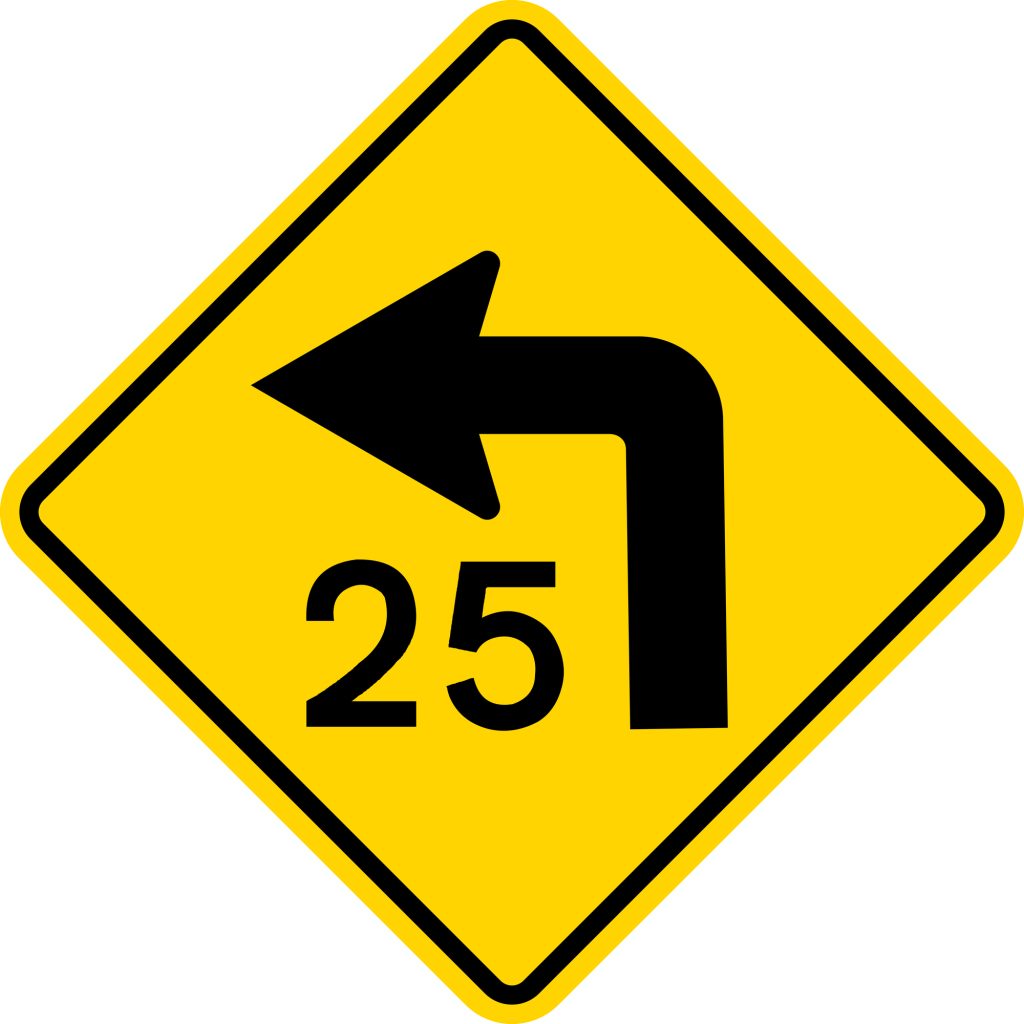

Advisory yellow warning signs are designed to alert drivers to conditions that require extra caution, and one of the most important things they communicate is the suggested speed for safely navigating a curve, hill, or other roadway feature. These signs are not legal speed limits but recommendations that reflect the maximum safe speed under normal conditions. Following these suggested speeds is critical for maintaining control of the vehicle and preventing accidents.

When approaching a curve, for example, entering too quickly can lead to a loss of traction, which increases the risk of skidding or rolling over. Even a small misjudgment can make it difficult to steer properly, especially in wet or icy conditions. Advisory speeds are calculated to provide a margin of safety, allowing drivers to respond to unexpected changes in the road, such as sharp turns, narrow lanes, or hidden obstacles. Ignoring these recommendations is one of the most common causes of single-vehicle crashes on curves.

The importance of following advisory speeds extends beyond curves. Hills, sharp intersections, and areas with frequent wildlife crossings often carry advisory signs because these conditions require slower, more deliberate driving. Approaching these areas at a speed higher than advised reduces reaction time, making it harder to respond to sudden hazards. Slowing down allows the driver to maintain control, adjust to changes in traffic flow, and reduce the severity of potential collisions.

Advisory speeds also protect passengers and other road users. A vehicle traveling at the recommended pace is easier to maneuver and stop, reducing the likelihood of collisions with other drivers, cyclists, or pedestrians. Following these speeds demonstrates responsible driving and builds good habits that extend to other areas of road safety.

In addition, advisory speeds are especially important for new or less experienced drivers. These drivers may misjudge curves or fail to account for how different conditions, such as weather or road surface, affect vehicle handling. Paying attention to the posted speed recommendation helps ensure they remain in control and confident behind the wheel.

Ultimately, advisory yellow warning signs exist to prevent accidents and keep everyone on the road safe. Respecting these suggested speeds is a simple but powerful way to drive more safely, protect yourself and others, and respond effectively to the ever-changing conditions of the roadway.


Advisory yellow warning
signs are designed to alert drivers to conditions that require extra caution,
and one of the most important things they communicate is the suggested speed
for safely navigating a curve, hill, or other roadway feature. These signs are
not legal speed limits but recommendations that reflect the maximum safe speed
under normal conditions. Following these suggested speeds is critical for
maintaining control of the vehicle and preventing accidents.


When approaching a curve,
for example, entering too quickly can lead to a loss of traction, which
increases the risk of skidding or rolling over. Even a small misjudgment can
make it difficult to steer properly, especially in wet or icy conditions. Advisory
speeds are calculated to provide a margin of safety, allowing drivers to
respond to unexpected changes in the road, such as sharp turns, narrow lanes,
or hidden obstacles. Ignoring these recommendations is one of the most common
causes of single-vehicle crashes on curves.


The importance of following
advisory speeds extends beyond curves. Hills, sharp intersections, and areas
with frequent wildlife crossings often carry advisory signs because these
conditions require slower, more deliberate driving. Approaching these areas at
a speed higher than advised reduces reaction time, making it harder to respond
to sudden hazards. Slowing down allows the driver to maintain control, adjust
to changes in traffic flow, and reduce the severity of potential collisions.


Advisory speeds also protect
passengers and other road users. A vehicle traveling at the recommended pace is
easier to maneuver and stop, reducing the likelihood of collisions with other
drivers, cyclists, or pedestrians. Following these speeds demonstrates
responsible driving and builds good habits that extend to other areas of road
safety.


In addition, advisory speeds
are especially important for new or less experienced drivers. These drivers may
misjudge curves or fail to account for how different conditions, such as
weather or road surface, affect vehicle handling. Paying attention to the
posted speed recommendation helps ensure they remain in control and confident
behind the wheel.


Ultimately, advisory yellow
warning signs exist to prevent accidents and keep everyone on the road safe.
Respecting these suggested speeds is a simple but powerful way to drive more
safely, protect yourself and others, and respond effectively to the ever-changing
conditions of the roadway.


Similar Posts

  • Helping Students with Anxiety Manage Stress During Driving Tests

    Managing anxiety during driving tests can be challenging for students, but there are several strategies that can help them stay calm and focused. Driving tests are significant milestones, and the pressure to perform well can trigger stress. By adopting mindful techniques, students can improve their chances of success while managing their anxiety. One of the most effective ways to reduce stress is through preparation. Being familiar with the driving route and practicing potential test scenarios can increase confidence. Students should also aim to get plenty of rest the night before the test, as being well-rested can improve concentration and reduce nervousness. Deep breathing exercises can be incredibly beneficial during stressful moments. Taking slow, deep breaths before and during the test can help students stay grounded…

  • Making sure your car windows are completely clear of snow

    Making sure your car windows are completely clear of snow is very important for safe driving, especially during winter conditions. Snow left on windows can seriously limit visibility, making it harder to see vehicles, pedestrians, traffic signals, and road hazards. When a driver cannot clearly see their surroundings, reaction time is reduced, and the risk of a collision increases. Clear windows allow the driver to gather accurate visual information and make calm, informed decisions while driving.Snow buildup on side windows and mirrors is just as dangerous as snow on the windshield. Drivers rely on these areas to check blind spots and monitor traffic flow around them. If snow blocks these views, lane changes and turns become far riskier. Rear windows are equally important, especially when…

  • How To Teach Student with ADHD to Drive

    Teaching individuals with ADHD to drive requires a modified approach that considers their unique strengths and weaknesses. Here are some strategies that I use to help ADHD students become confident and safe drivers: Structured Lessons: present driving lessons into smaller, more understandable objectives. Focus on step-by-step skills in each lesson to avoid having the student feel overwhelmed. This approach can better their understanding and helping the student be more comfortable. Visual Aids and Diagrams: Use visual aids, diagrams, illustrations and charts to show driving concepts. ADHD students often respond well to visual aids, helping them better understand and remember important information. Repetition and Practice: Learning through repetition and practice. Encourage regular driving practice in different driving environments to build confidence and improve skills. Consistent exposure…

  • Effective Communication Tools for Teaching Students with Autism Spectrum Disorder How to Drive

    Teaching students with autism spectrum disorder (ASD) how to drive requires very patient communication skills that connect to their specific needs. Clear and specific communication is necessary to ensure a successful learning experience. One effective tool is the use of very detailed directions giving the student step by step what tasks will be expected and when. Also writing down directions on paper giving the student step by step is another great way to communicate with your student. Helping students with ASD to understand and anticipate each step of the process will go a long way in building a stronger level of understanding of the tasks but also builds trust between you and your student. Realistic stories regarding driving are another important tool in teaching driving…

  • Tips for Parents to Reinforce their Students’ Learning Process to be More Positive when Learning to Drive.

    Helping a student driver build confidence behind the wheel requires patience, encouragement, and a supportive approach. Parents play a key role in reinforcing a positive learning experience by focusing on constructive feedback rather than criticism. Maintaining a calm and reassuring tone can ease nerves and make the learning process more enjoyable. Even when mistakes happen, framing them as learning opportunities rather than failures can boost confidence and reduce anxiety. Creating a stress-free environment is essential for effective learning. Choosing a quiet, low-traffic area for early practice allows new drivers to build their skills gradually. Once they are comfortable, increasing the complexity of driving scenarios helps them develop real-world experience. Allowing the student to progress at their own pace encourages self-assurance and competence behind the wheel….

  • Creating a Calm Environment: Reducing Anxiety in Driving Lessons

    As the instructor I can also create a sense of safety by explaining that as an instructor I’m always in control and can intervene if necessary, reducing the fear of accidents. Mindfulness techniques can be introduced to help learners manage their stress. Simple breathing exercises before or Creating a Calm Environment: Reducing Anxiety in Driving Lessons Creating a calm environment during driving lessons is essential to reducing anxiety in new drivers. Many students feel nervous behind the wheel, which can impact their ability to focus and make good aculeate decisions. A supportive and soothing atmosphere can help alleviate these feelings, making the learning process smoother and more enjoyable. One of the most effective ways to create this environment is through clear communication. Instructors should speak…